Roots & Roses: Why I’m Planting ‘Kiss Me Kate’ in the Heart of Prague
How I’m building my secret expat sanctuary to escape the city noise...

There is something poetic and bittersweet about being an expat in Prague. We spend so much energy trying to ‘put down roots’ in a beautiful historical little city that can often feel bureaucratic, isolating, and even exhausting. This spring, after facing my own share of intense corporate burnout, and as a means to deal with my recovering physical and mental health, I decided to take the metaphor literally… and plant some actual roots…in some pots in my Prague garden!
I didn’t just want a garden that looked good; I wanted one that felt like an experiential romance sanctuary, woven together by scent, beauty, roses and many other secret wonders… I wanted a rose that would climb up a trellis like it was trying to reach a Juliet balcony. Enter: the ‘Kiss Me Kate’ rose.
If you’ve just bought a bundle of bare-root sticks that look like they’ve seen better days, don’t panic. I’m right there with you. Here is everything you need to know about turning those dry sticks into the most romantic corner of your Prague garden.
Meet the Star: Kiss Me Kate (KORnagelio)
Bred by the famous German house Kordes, this rose is basically the sturdy, reliable neighbor who also happens to be drop-dead gorgeous.
It’s part of their Parfuma® collection. This means it wasn’t just bred for looks—it was bred to smell divine! While she’s known as a climbing rose that can soar up to 3 meters on flexible, incredibly easy-to-train canes, you can easily keep her as a compact, 1-to-1.5-meter shrub with just a little pruning and shaping—all while pumping out those gorgeous, 10-centimeter vintage pink blossoms.
The name itself is officially a nod to Cole Porter’s classic, dramatic 1948 Broadway musical Kiss Me, Kate. But if you ask European rose enthusiasts, there’s a much juicier rumor: if the name sounds like a headline, that’s because it is!
…It`s said that Kordes’ head breeder actually named her after Kate Middleton during the height of the 2011 Royal Wedding media frenzy, when European tabloids were plastered with the phrase “Kiss me, Kate!” So whether she’s named after theater royalty or actual royalty, this rose is born to put on an absolute show.
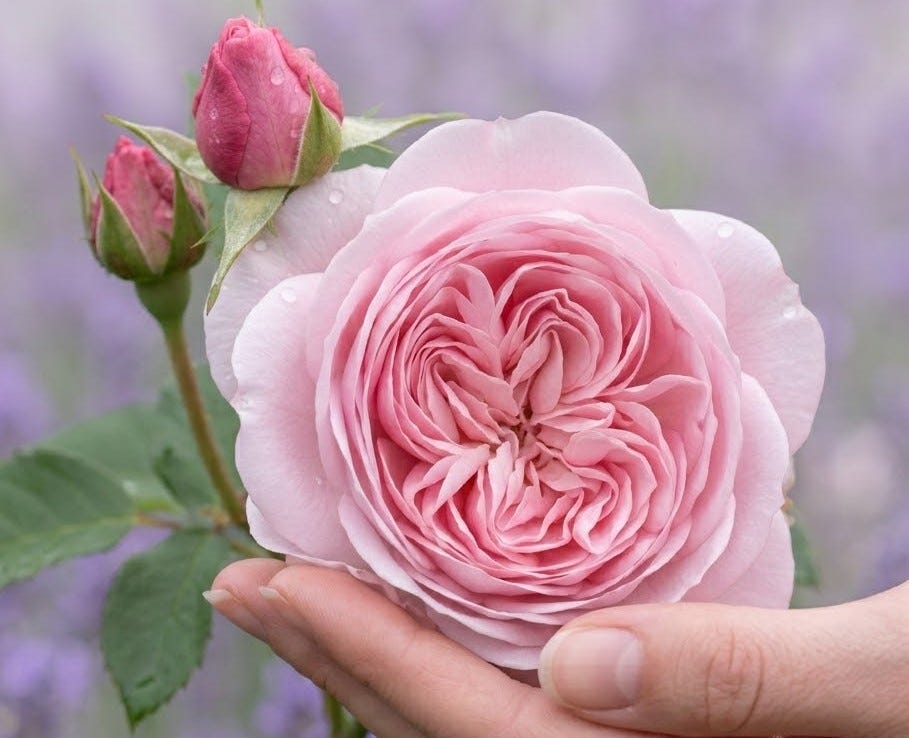
The look: Think “vintage romance.” The blooms are large, quartered (meaning they are packed with 40-90 petals), and a soft, nostalgic pink.
The scent: It’s an award-winner for a reason. It starts with fresh lemon peel and green apple, then settles into a sweet raspberry heart. It’s not that dusty “grandma’s soap” rose scent; it’s fresh and fruity.
The resilience: This is crucial for us here in Central Europe. It is highly resistant to black spot and mildew, which is a lifesaver during those damp, grey Czech autumns.
The “Bare Root” Reality Check
When my roses arrived, they didn’t look like the photos. They looked like a bundle of semi dead twigs. This is the bare root reality.
Because I want flexibility in my urban space, I chose to plant my ‘Kiss Me Kate’ roses in deep pots for their first year. Planting in containers in Prague presents a unique challenge: managing the intense, dry summer heat on a balcony or patio.
To give my “sticks” the absolute best start without drowning them in heavy clay or over-complicating things, I skipped the heavy compost and traditional fertilizers (which can burn tender new roots) and used a precise, high-tech planting cocktail instead:
The foundation: I filled my deep pots with standard Zahradnický substrát (garden substrate), which offers a clean, well-draining base.
The hydration insurance: To combat Prague’s increasingly dry, baking summer weeks, I mixed TerraCottem into the soil. These clever water-retaining polymers act like tiny underground reservoirs, keeping the roots consistently hydrated.
The secret weapon: Before the roots hit the soil, I thoroughly dusted them with Symbivit Tric. These mycorrhizal fungi form a symbiotic relationship with the rose, drastically expanding the root system’s reach to absorb water and nutrients.
The wake-up call: After a good 24-hour initial soak in a bucket of water, I planted them, packed the soil gently, and watered them in deeply.
Because the substrate is fresh and the Symbivit is doing its magic, no extra fertilizing or compost is needed for this first year. It’s all about letting nature build its network.
The Golden Rule: Sleep, Creep, Leap
If you are new to climbing roses, memorize this mantra. It will save you from thinking you’ve failed when nothing happens in July.
Year 1: Sleep. The rose is busy building a root system underground. You might get a few flowers, but it’s mostly napping.
Year 2: Creep. You’ll see some cane growth and more blooms. It’s waking up.
Year 3: Leap. Boom. This is when it takes off, covering your trellis and pumping out flowers.
Landscape Dreams
I’m training mine up a black metal obelisk right in its container to contrast with the soft pink blooms. ‘Kiss Me Kate’ is incredibly versatile for city living:
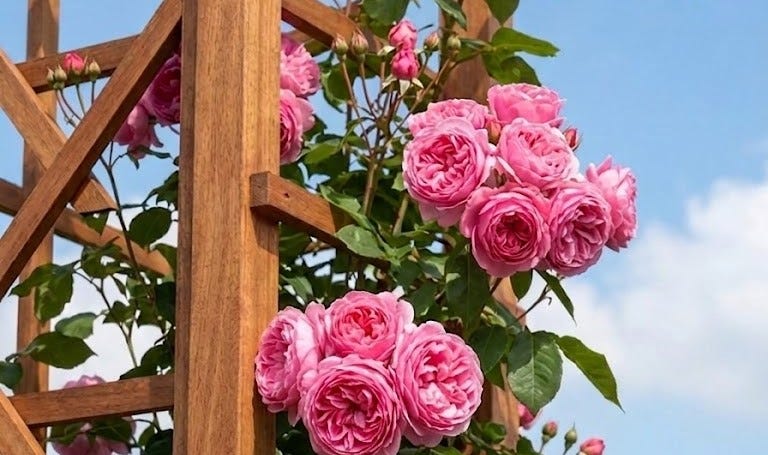
The balcony option: Yes, you can absolutely do this in a pot! Just ensure it’s a deep container (at least 40cm for the first year and 50cm onward) so those Symbivit-boosted roots have plenty of room to stretch downward.
The “Bohemian Courtyard” look: If you eventually move it to the ground, train it against a warm, stucco wall. A south-facing position is best to catch that beautiful Czech summer sun, it needs minimally 5 hours of sun.
Why I Love It
In a city as old and stony as Prague, adding this soft, living, fragrant layer to my home makes me feel like I’m finally planted. It’s a little bit of patience, a little bit of digging, and a whole lot of hope for the season ahead.
🌹
I’ll keep you posted on how beautifully she grows and fills out her new Prague home.
⚡ Real-Time Sanctuary Update: Remember the green katydid nymphs protecting this 'Kiss Me Kate' rose from aphids? They have just become targets in a high-stakes, real-time wildlife thriller right next to the trellis. [Click here to read 'The Phantom in the Chimes' and watch the secret war unfold.]
Until then, I’m leaving you with one of my favorite thoughts by Alphonse Karr:
🌹'We can complain because rose bushes have thorns, or rejoice because thorns have roses.'🌹
🌿 Join the Oasis
My Expat Garden is a safe and independent sanctuary dedicated to everyone trying to make their beautiful adoptive place their home focusing on beauty, mental health and happiness. Whether you are here for a season, a lifetime, or no longer even consider yourself an “expat”, this is an invitation to slow down, practice mindfulness, and discover the joy of growing your own living beauty.
This is a welcoming space if you are looking to build a deeper connection with yourself, with nature, and with a gentle community sharing this same love. Together, we are learning to create our own little-big sanctuaries on balconies, terraces, gardens and courtyards.
If you have questions, need my help with confidently designing your own personal green oasis of peace, beauty and mental health, subscribe to my page and reach out to me directly.